Community Relations
While 911 calls are our primary responsibility, Catawba County EMS is committed to community involvement. We do that through presentations, ambulance displays, classes, programs, and event coverage.
We are happy to visit schools, churches, civic groups and any other gatherings of people who would like to learn more about EMS or health and safety. Some of our classroom presentations include the following topics:
- Basic First Aid
- Career Presentations
- What Does EMS Do?
- Stop The Bleed
If you would like to have Catawba County EMS make an educational visit to your organization or event, please click here to complete your request and we will be in touch with you. We must have at least 2 weeks’ notice to consider requests. Public Relations & Education visits are free of charge.
For more information on specfic programs, click the links below.
Our Special Events Team provides an EMS presence at large-crowd events, such as festivals, sporting events, etc. This team can provide bike medics, golf carts, and aid stations inside any crowd perimeter. If you would like to request a Catawba County Special Events Team for your upcoming event, please click hereto complete your request and we will be in touch with you. We must have at least 3 weeks’ notice to consider Special Event Team requests.
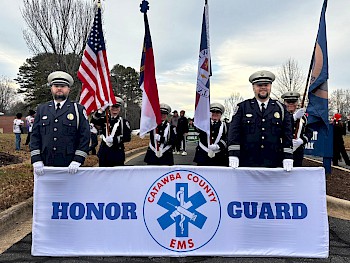
The Mission of the Catawba County EMS Honor Guard is to provide honor, presentation, and representation to all Catawba County Emergency Medical Services personnel, past and present, with the highest level of professionalism and dignity.
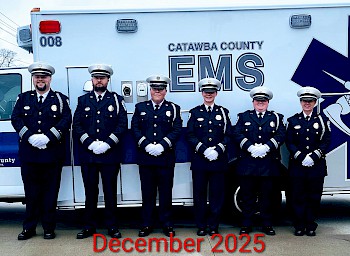
The Catawba County EMS Honor Guard, established in 2025, is a team of meticulously trained and highly disciplined EMS professionals. The primary function of the honor guard is to provide ceremonial honors for fallen EMS personnel, both past and present. Each team member is outfitted in a Class A uniform. The team members carry four flags during ceremonies including the American Flag, the North Carolina State Flag, the Catawba County Flag and the Catawba County EMS Agency Flag. Secondary functions of the team include, but are not limited to, marching in local parades, conducting memorial services and participating in other events by request when approved by the EMS Manager. Our team is also available to provide support and/or services to other local emergency service agencies and surrounding counties when requested.
The team is currently comprised of six Catawba County EMS staff members with hopes of expanding the team in the future. Our honor guard has two commanders who are tasked with coordinating events, conducting training exercises and calling commands while the team is marching and/or performing at an event or ceremony. All team members are cross-trained to march, carry the ceremonial flags, and appropriately fold and present the American Flag to family members at a funeral/memorial service. Our team is capable of performing both casket or urn carries, and often utilizes a memorial bell as part of the service. The team is made up of the following Catawba County EMS personnel:
Catawba County EMS Honor Guard Team Members:
Adam Morris – Commander
Casey Brennan - Commander
Alexis Braswell
Mary Cook
Samantha Bumgarner
Sylvia Fisher
If you have questions about our Honor Guard, or wish to request our services, please contact the EMS Manager at 828-465-8234 or wbutler@catawbacountync.gov.
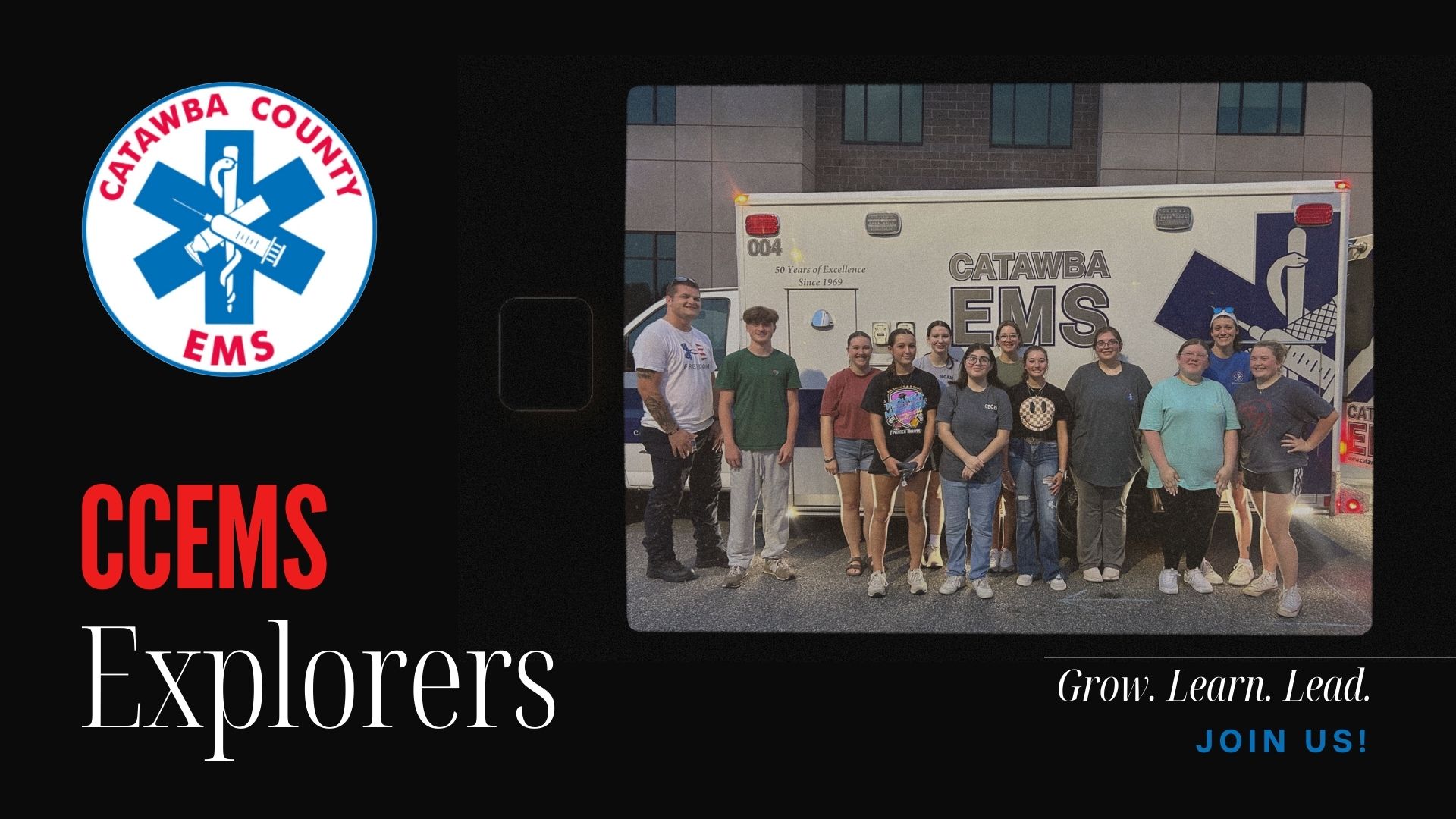
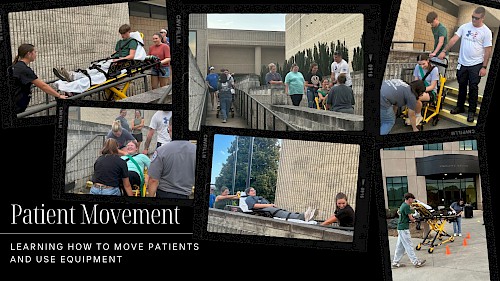
In January 2025, Catawba County EMS began our Paramedic Explorer Program for high school students. The CCEMS Paramedic Explorer program is a great way for students to gain firsthand experience in the medical field. It provides high school students with valuable knowledge and skills related to emergency medical care.
The application process for our program opens near the beginning of the school year. The group meets once a month with the following goals:
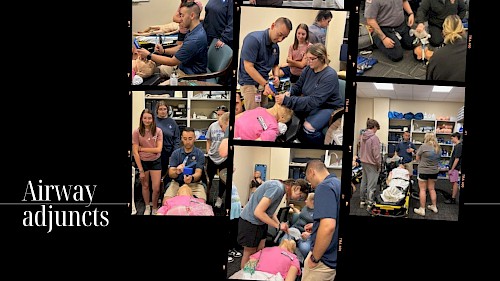
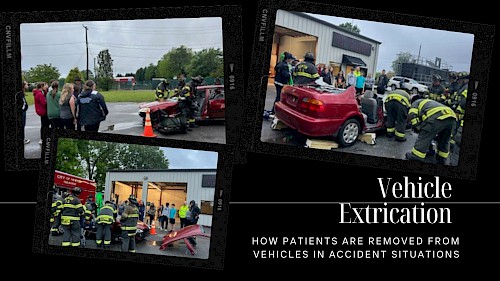
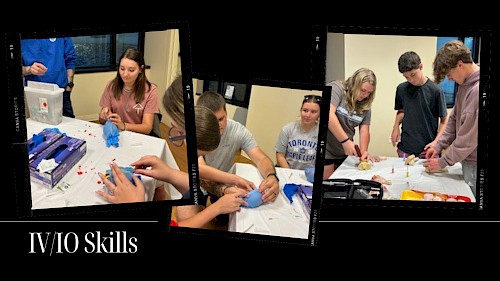
- Education and Training: Provide participants with comprehensive knowledge about Emergency Medical Services including first aid, CPR, and basic life support techniques.
- Career Exploration: Allow young people to explore careers in the medical field, particularly in Emergency Medical Services, by offering hands-on experiences and mentorship from professionals.
- Skill Development: Develop important skills such as critical thinking, problem solving, teamwork, and communication, which are essential in emergency situations.
- Community Service: Encourage participants to give back to their community by participating in public service activities and emergency response efforts.
- Leadership and Responsibility: Develop leadership qualities and a sense of responsibility through structure s activities and real-life emergency scenarios.